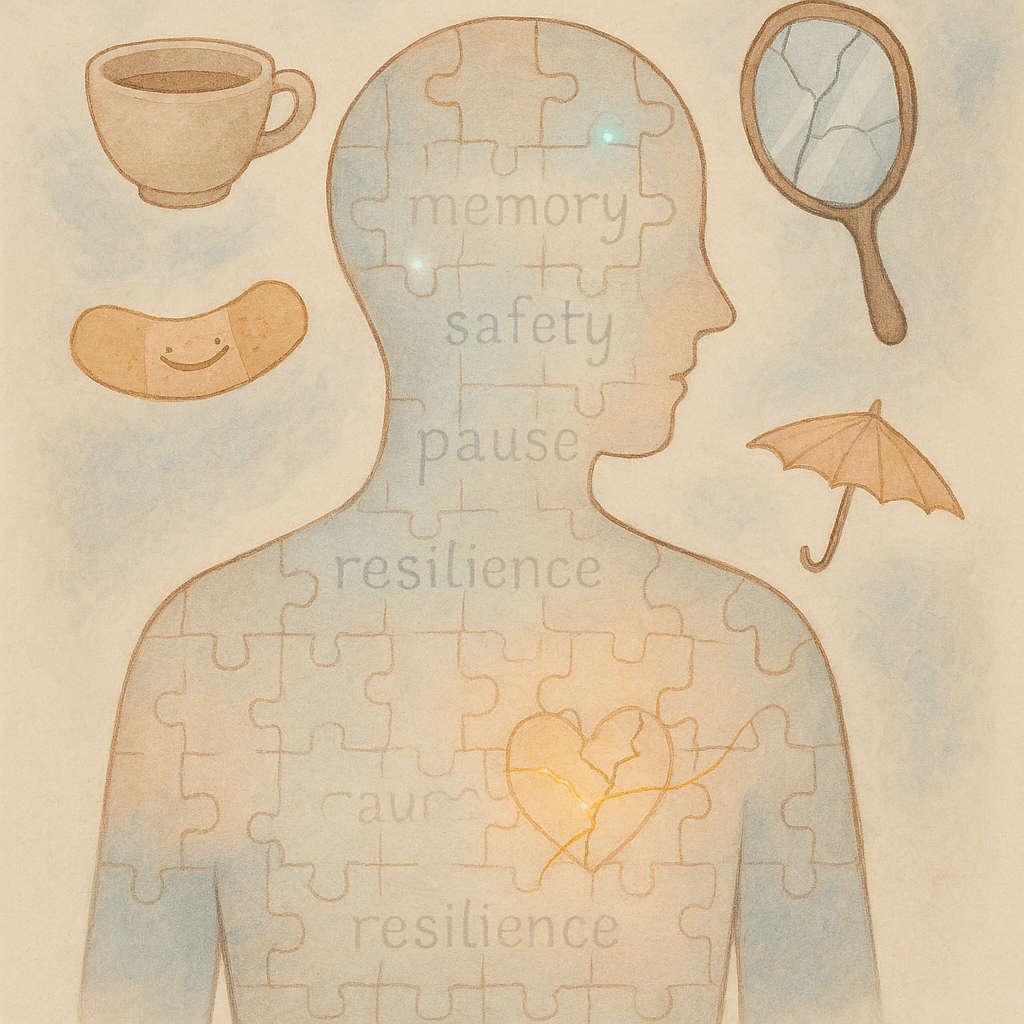
Trauma is a strange kind of editor. It doesn’t use red ink or loud corrections. It writes quietly, in invisible ink, revising our reactions, preferences, and pauses—long before we realize we’ve been edited at all.
Trauma doesn’t always arrive like a thunderstorm. Sometimes it slips in like a dripping tap: a harsh word repeated too often, a fear never named, a love that came with conditions. And one day, without warning, you find yourself flinching at raised voices, over-explaining simple choices, or laughing at jokes that hurt—just to keep the room calm.
We often label behaviour without reading its footnotes. The angry person? “Difficult.” The silent one? “Cold.” The control freak? “Too much.” But trauma sits in the margins whispering, “This once kept you safe.”
As someone once wisely (and painfully) put it:
“What looks like overreaction is often a memory looking for safety.”
Trauma teaches the body faster than the brain. Long after logic says, “You’re safe now,” the nervous system replies, “Are you sure?” So we become hyper-independent because depending once disappointed us. We become people-pleasers because peace felt like survival. We avoid closeness not because we don’t want love, but because we learned that love can leave without notice.
There’s a strange humour in it too. Trauma turns us into excellent mind-readers—except we’re usually wrong. We rehearse conversations that never happen, prepare for disasters that don’t arrive, and apologize for taking up space in rooms we were invited into.
Or as one quiet truth says:
“Trauma doesn’t make you weak; it makes you alert in a world that once felt unsafe.”
But here’s the hopeful twist—behaviour shaped by trauma is not behaviour sentenced for life. Awareness loosens the ink. Compassion fades the sharp lines. With patience, new edits are possible.
Healing doesn’t mean erasing the past; it means updating the rules it taught you. You’re allowed to rest without earning it. You’re allowed to say no without explaining your childhood. You’re allowed to respond, not just react.
Trauma may have shaped your behaviour, but it doesn’t own your future.
Or in gentler words:
“You are not broken—you are patterned. And patterns can change.”
Thought to ponder:
If some of your habits were once acts of survival, what would change if you thanked them… and then gently told them they’re no longer needed?


EXCELIENT thought.
LikeLiked by 1 person
Thank you 😊
LikeLike