
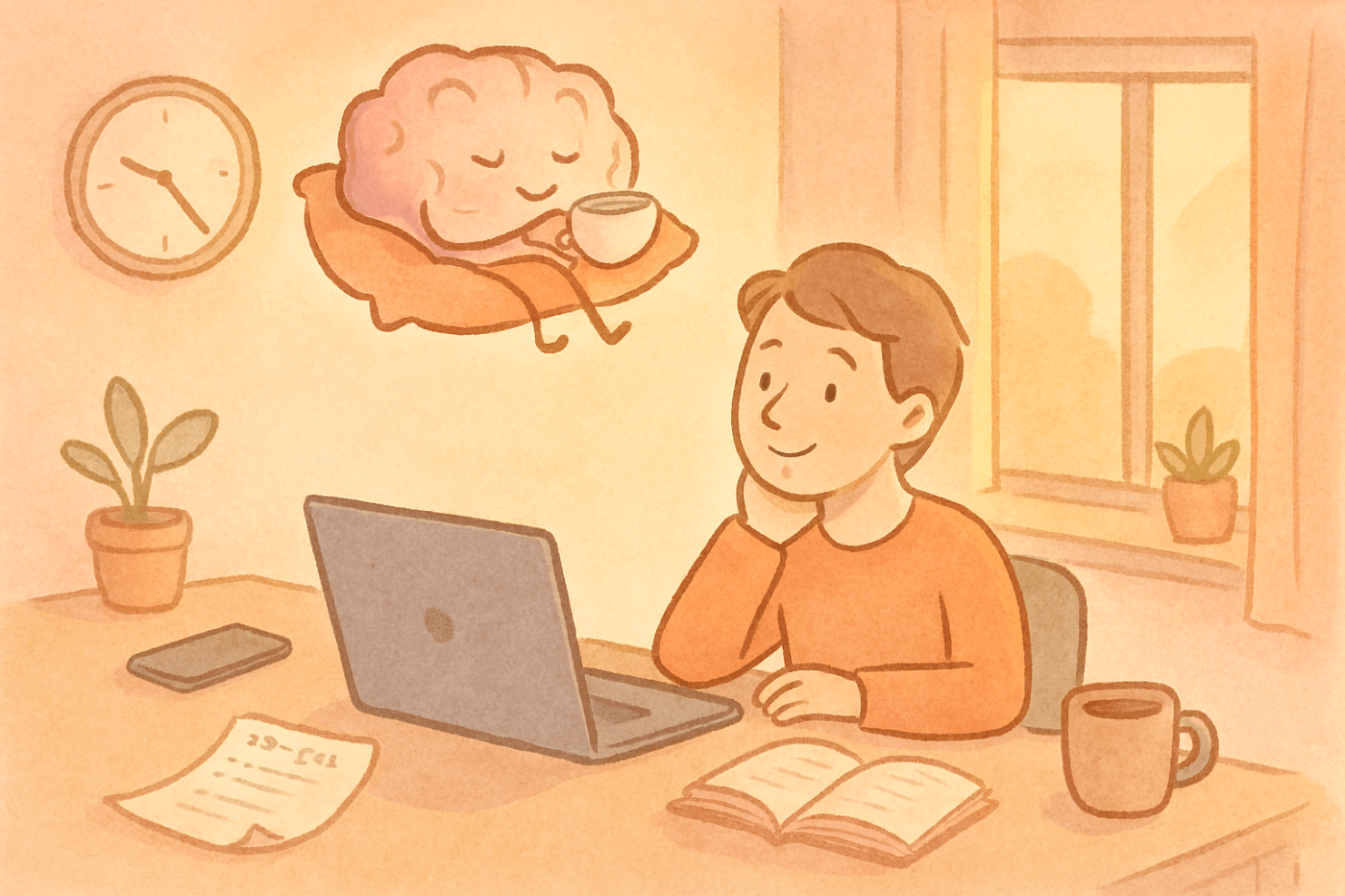
Procrastination is not laziness. Laziness is doing nothing and feeling okay about it. Procrastination is doing everything else while feeling guilty about not doing the one thing that matters. It’s replying to emails you don’t need to reply to, reorganizing your cupboard at midnight, and suddenly remembering to water a plant that survived weeks of neglect—all because one task dared to stare at you.
Psychologically, procrastination is an emotional regulation problem, not a time-management one. Our brain isn’t asking, “When should I do this?” It’s whispering, “How can I avoid feeling uncomfortable right now?”
“The brain prefers relief now over reward later.”
Take a real-life example: a student knows exams are coming. The book is open. The intention is strong. But the brain imagines boredom, fear of failure, and the pressure of expectations. So what does it do? It escapes—to reels, snacks, cleaning the desk, or suddenly deciding that this is the perfect moment to Google “How successful people study.” Ironically, the research becomes another form of delay.
Procrastination often disguises itself as productivity. A working parent may postpone an important presentation by folding laundry, helping children with homework, or replying to “urgent” messages. Everything feels useful—except the one thing that actually moves life forward.
“Procrastination doesn’t mean you’re inactive; it means you’re active in the wrong direction.”
From a psychological lens, fear sits at the center—fear of failure, fear of not being good enough, fear of success, or even fear of judgment. Perfectionists procrastinate not because they don’t care, but because they care too much. If they don’t start, they can still believe, “I could have done it perfectly.”
A powerful example appears in many self-help narratives: the character who waits for the “right mood” to begin. Pages go blank because inspiration hasn’t arrived. But the twist is always the same—action creates motivation, not the other way around.
“You don’t wait to feel ready; you work to feel ready.”
Another common trap is the “future self illusion.” We imagine our future self as calmer, more disciplined, and magically energetic. Tomorrow’s version of us seems more capable than today’s. But tomorrow arrives wearing the same pyjamas and the same doubts.
“Tomorrow is often just today with better intentions.”
What helps? Shrinking the task until it stops scaring the brain. Not “write the article,” but “write one messy paragraph.” Not “clean the house,” but “clear one chair.” The brain relaxes when the task feels survivable.
Most importantly, self-compassion breaks the cycle. Shame fuels procrastination; kindness weakens it. When we stop attacking ourselves for delaying, we reduce the emotional weight that caused the delay in the first place.
Thought to Ponder 🌱
If procrastination is your mind protecting you from discomfort, what discomfort is it trying to save you from—and what might happen if you gently faced it for just five minutes today?
Sometimes, the bravest productivity begins not with discipline, but with understanding.
 Sharon's Read And Reflect
very nice article
LikeLiked by 1 person
Thank you 😊
LikeLike