
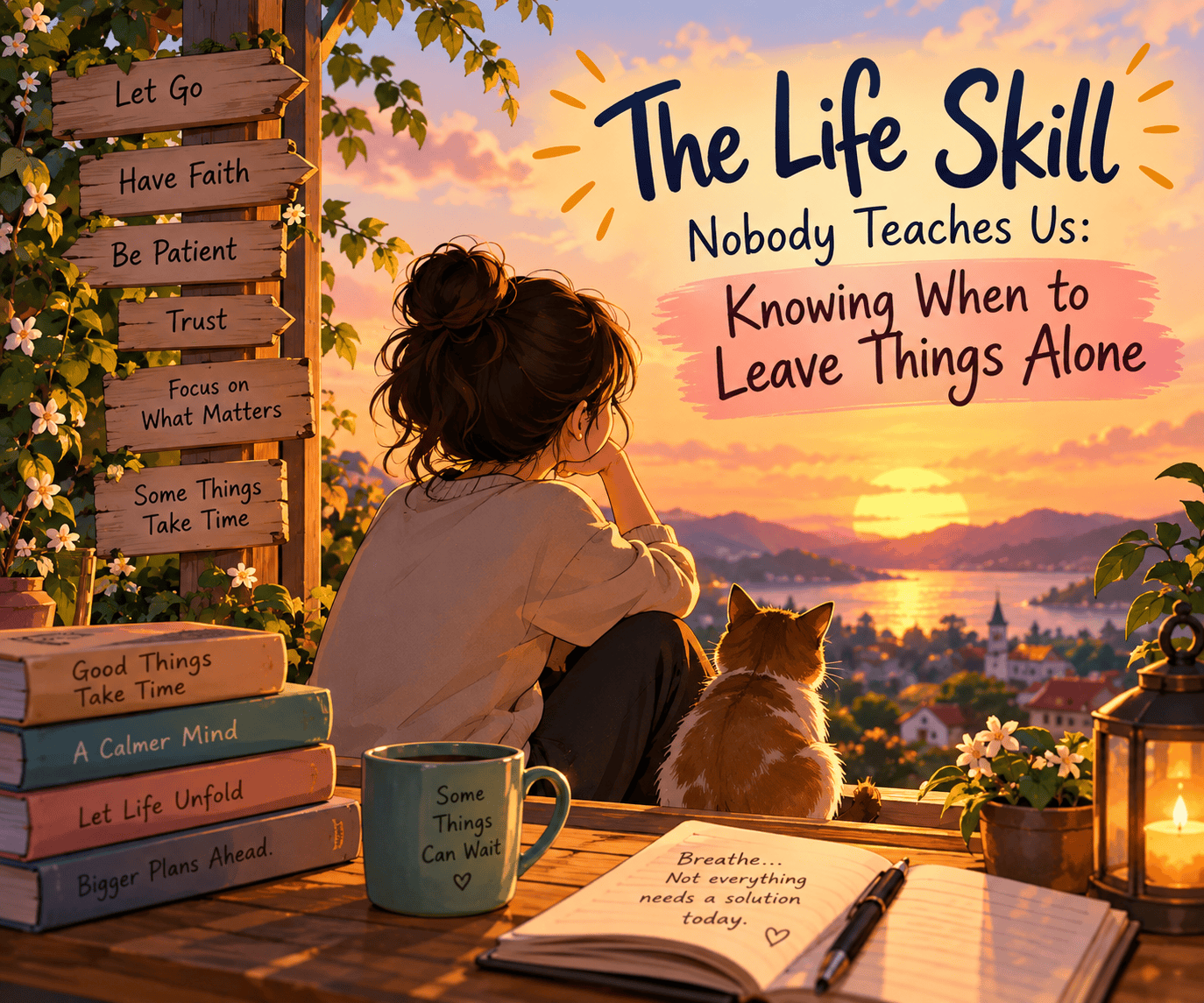
What’s the most underrated life skill?
There is a strange habit most human beings develop somewhere along the way: trying to fix everything.
A delayed message becomes a mystery.
A changed plan becomes a crisis.
A misunderstanding becomes a three-page explanation waiting to happen.
And suddenly, an ordinary Tuesday has turned into an episode of Detective: Why Did They Leave Me on Read?
Perhaps one of the most underrated life skills is something nobody puts on a résumé:
Knowing when to leave things alone.
We are constantly told to try harder, work harder, speak up, fight for what matters and never give up.
All good advice.
But sometimes, the bravest thing is knowing when enough is enough.
“Not everything that feels unfinished needs to be completed by us.”
Some situations need action. Others need patience.
Some conversations need an honest explanation. Others are better left unfinished.
Some people need to be held closer. Others need to be released gently.
The difficult part is knowing the difference.
Think about a seed.
Nobody digs it up every morning to check whether the roots are doing their job. Yet humans do something remarkably similar with their lives. A plan doesn’t work immediately, so they panic. A dream takes longer than expected, so they doubt it. Someone doesn’t respond, so they create twelve possible explanations before breakfast.
Sometimes life simply needs a little space to unfold.
This is one reason The Alchemist by Paulo Coelho remains such a meaningful book for many readers. Santiago follows his dream, but his journey is filled with uncertainty, unexpected turns and moments he cannot control. The story gently reminds us that pursuing something does not mean controlling every step of the journey.
“Patience is not standing still; it is moving forward without demanding that everything happen immediately.”
Knowing when to leave things alone doesn’t mean giving up.
It means recognising the difference between persistence and resistance.
Persistence says, “This matters, so I’ll keep trying.”
Resistance says, “This isn’t working, but I refuse to accept it.”
There is wisdom in knowing which one is speaking.
Sometimes the healthiest response to an unanswered question is to wait.
Sometimes the kindest response to an argument is silence.
Sometimes the best response to rejection is dignity.
And sometimes a problem becomes smaller the moment nobody keeps poking it.
Life doesn’t always need another explanation, another attempt, another message or another plan.
Some things need effort.
Some things need courage.
And some things need time.
Perhaps growing wiser isn’t only about learning what to do.
Perhaps it is also about learning what not to do.
To pause before reacting.
To stop before chasing.
To breathe before responding.
To accept that not every door needs to be knocked on repeatedly.
And, occasionally, to put the phone down before sending that “Hey… are you mad at me?” message for the fourth time.
Because sometimes, leaving things alone isn’t doing nothing.
It is allowing life to do what we cannot.
Thought to ponder
What if some of the things that feel stuck in life aren’t waiting for more effort—but simply waiting for us to stop interfering and give them room to unfold?


Leave a comment