What villain actually had a good point?
When I was younger, stories felt simple. The hero was good. The villain was bad. The lesson was obvious.
But somewhere along the way, I started noticing something interesting.
Some villains don’t stay in our minds because of what they do. They stay because of what they say.
Take Joker from The Dark Knight. I don’t agree with his actions for a second. He spread fear and chaos wherever he went. But one question he raised has stayed with me: How much of our goodness depends on our circumstances? When life becomes difficult, do our values remain the same? Thankfully, many people prove that kindness survives even in the hardest situations. Still, it is an uncomfortable question worth asking.
Then there’s Thanos. Erasing half of all life is unimaginable and morally wrong. Yet his concern about limited resources and humanity’s endless consumption isn’t completely fictional. We waste food while others go hungry. We exploit nature as though it has no limits. His conclusion was horrifying, but the issue he pointed to is one we continue to wrestle with.
Closer to home, I think of Kancha Cheena from the movie Agneepath. He believed that fear was the quickest way to gain power and control. While his cruelty can never be defended, his character reminds us of a truth that still exists in the real world: fear can influence people more quickly than respect. History and everyday life show us that people may obey out of fear—but they rarely stay loyal because of it. Respect takes longer to earn, but it lasts far longer.
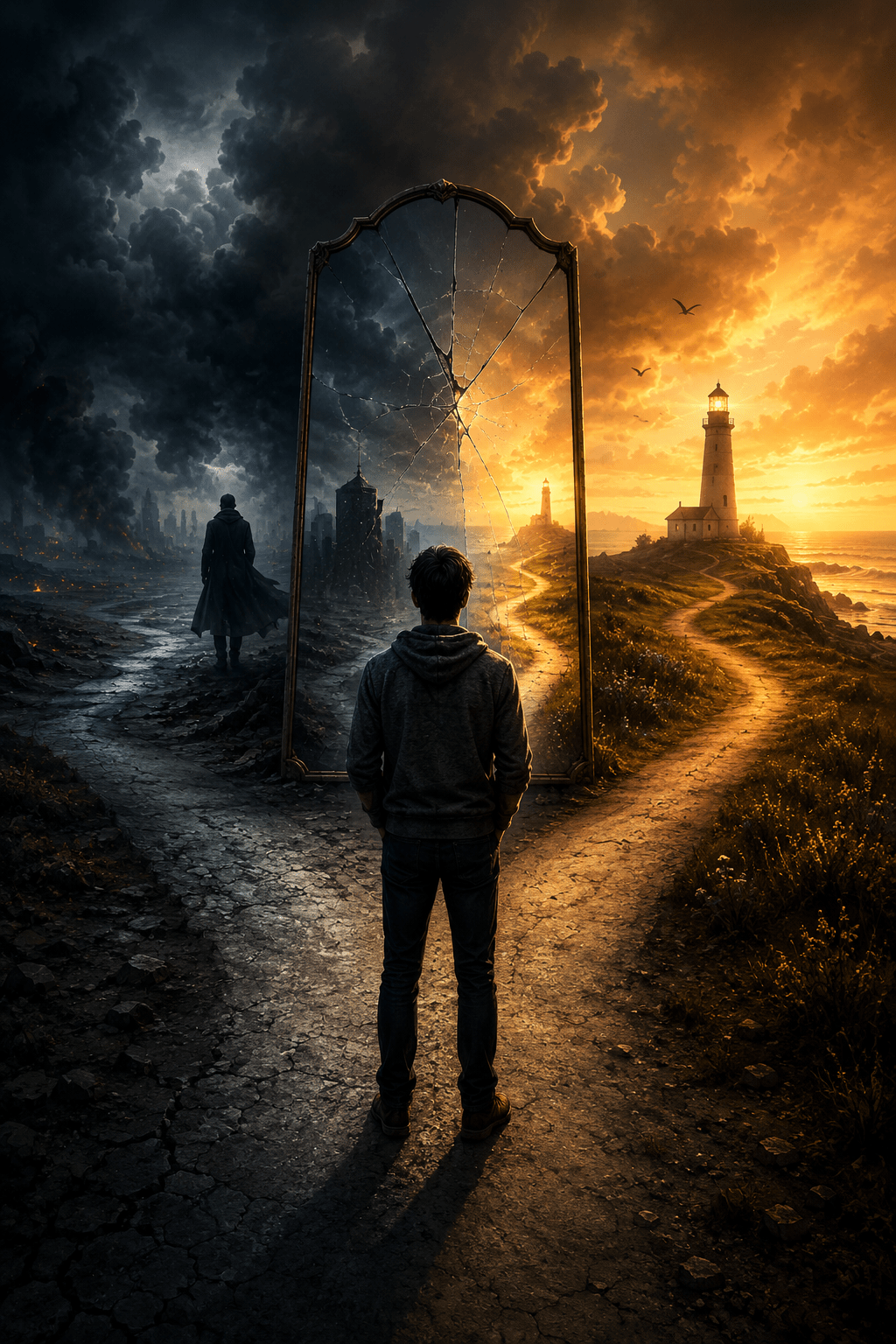
The more I think about it, the more I realize that great villains often hold up a mirror instead of simply throwing punches. They force us to examine ourselves.
That doesn’t mean they are right.
A person can identify a real problem and still choose the worst possible solution.
It’s like the difference between a lighthouse and a wildfire. Both produce light. One helps people find their way. The other destroys everything in its path. The light isn’t the problem. It’s how that light is used.
Maybe that’s why these characters remain unforgettable. They remind us that truth without compassion can become dangerous. Intelligence without empathy can become destructive.
Perhaps the real lesson isn’t to admire villains or dismiss them completely. It’s to separate the question from the answer, the concern from the method.
Because sometimes the hardest truths don’t come from heroes.
They come from people who chose the wrong path.
Thought to ponder
A wise person doesn’t reject an idea because of who said it. They judge it by whether it brings more humanity into the world.


Leave a Reply