
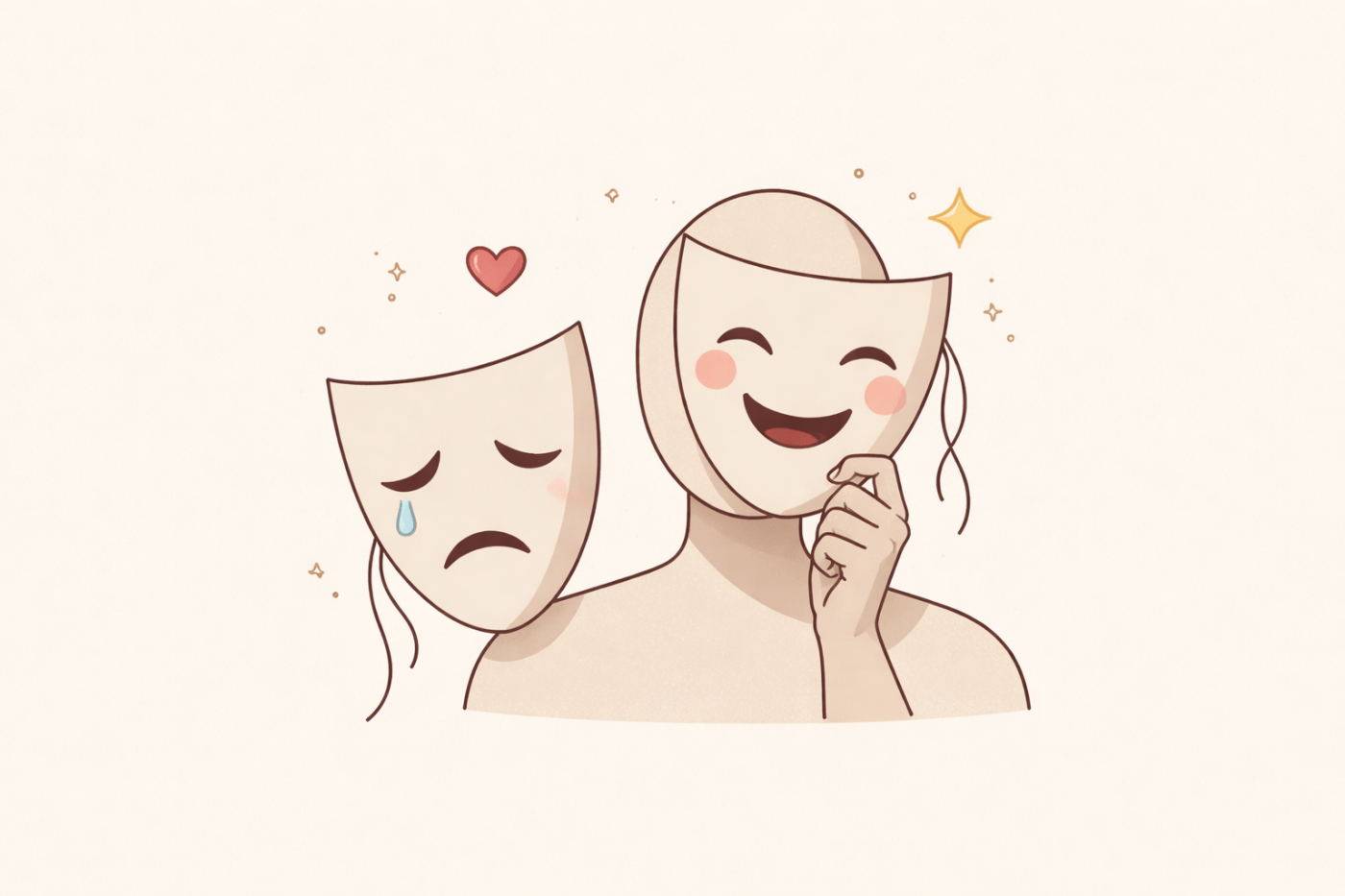
There is something strangely exhausting about people who are always performing.
Not the artists. Not the actors on stage. I mean the everyday “Oscar winners” who wake up, stretch dramatically, and put on a personality like it’s their favorite outfit of the day.
At first, it’s impressive.
They say the perfect things. Laugh at the perfect volume. Post the perfect captions. React with rehearsed shock — “Oh my God, really?” — even when the news is that you forgot your lunchbox.
But slowly, quietly, something inside you whispers, “Is this real?”
Because originality has a rhythm. Acting has a script.
And scripts don’t bend when storms come.
“Authenticity breathes. Performance suffocates.”
The trouble with people who constantly act is not that they are fake in a dramatic villain way. It’s that over time, their emotions feel edited. Their kindness feels scheduled. Their anger feels strategic. And trust — that delicate, invisible thread — begins to fray.
Trust is built on consistency. Not perfection. Not charm. Just simple, steady, unfiltered humanity.
When someone is always acting, you never know which version of them is walking into the room. Is it the “I support you fully” version? The “I secretly compete with you” version? Or the “Let me say what benefits me today” version?
It feels like trying to hug a hologram.
“Pretending may win applause, but it rarely wins loyalty.”
The irony is that people act because they want acceptance. They think a polished version of themselves is easier to love. But the more polished the surface, the harder it is to grip. Real connections need texture — imperfections, awkward pauses, honest disagreements.
Original people might stumble. They might overshare. They might say the wrong thing at the wrong time. But at least you know where they stand. Their “yes” means yes. Their “no” means no. Their smile is not sponsored by convenience.
Over time, handling someone who acts becomes emotionally draining. You start analyzing every word. “Did they really mean that?” “Is this another scene?” It turns friendship into detective work. And no one signs up for a relationship to solve mysteries daily.
The saddest part? Even the actors forget who they truly are. When you play a role long enough, you begin to believe it. And then, authenticity feels unfamiliar — even unsafe.
“Being original is risky. Acting is exhausting. But only one of them lets you sleep peacefully.”
Real people may not always impress the crowd, but they comfort the soul. They don’t need background music. They don’t need perfect lighting. They show up as they are — messy, evolving, beautifully human.
And perhaps that is the rarest kind of courage in today’s world.
Thought to ponder
If everyone removed their performance mask for just one day, who would feel lighter — the people watching, or the ones who were acting?
 Sharon's Read And Reflect
Leave a comment