
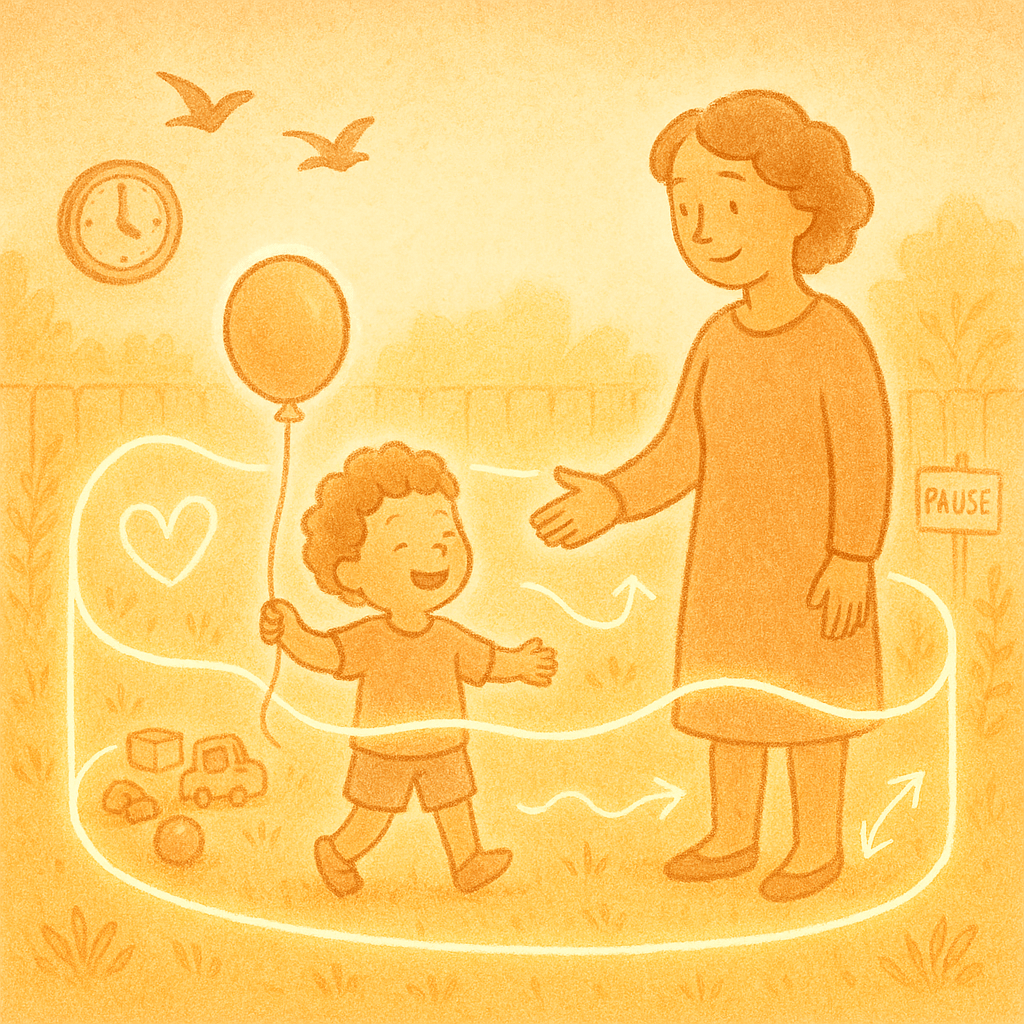
Parenting, they say, is unconditional love. What they forget to mention is that it also involves being a calm human while someone uses your leg as a drum, your patience as a trampoline, and your sanity as a suggestion. Somewhere between “My child is my world” and “Please stop touching me for five minutes” lives the magical concept of healthy boundaries.
Boundaries are often misunderstood. People think boundaries mean distance, coldness, or strict rules carved in stone. In reality, boundaries are more like traffic signals for relationships—without them, everyone crashes into everyone, honks loudly, and nobody gets anywhere. As one wise (and probably exhausted) parent once said, “Love without limits is chaos; limits without love are fear.”
Kids don’t come with an instruction manual, but they do come with a powerful radar for inconsistency. If today’s “no” becomes tomorrow’s “okay fine,” children don’t become manipulative—they become confused. Boundaries don’t restrict children; they reassure them. They silently say, “You are safe here. I am in charge.”
And yes, setting boundaries will invite protests. Loud ones. Dramatic ones. Oscar-worthy ones. But remember: “A child’s anger at your boundary is not proof of your failure—it is proof that the boundary exists.”
So how do we set boundaries without turning into either a dictator or a doormat? Here are 10 healthy, realistic, and human ways to do it:
1. Say what you mean, mean what you say
Empty warnings teach kids that words are negotiable.
2. Boundaries without shouting
Calm firmness is more powerful than loud authority.
3. Explain once, not ten times
Repetition weakens boundaries. Trust that they heard you.
4. Separate feelings from behavior
“I understand you’re angry” can coexist with “This behavior is not okay.”
5. Model the boundary you expect
If you want respect, show it—even when you’re tired.
6. Keep routines predictable
Structure reduces power struggles more than lectures ever will.
7. Use natural consequences
Life is the best teacher—let it teach safely.
8. Allow choices within limits
Freedom inside a fence feels empowering, not controlling.
9. Respect their ‘no’ too
Boundaries go both ways; consent starts early.
10. Repair after rupture
Mistakes happen. Repair teaches accountability, not perfection.
Parenting with boundaries is not about control; it’s about connection. It’s choosing long-term emotional health over short-term peace. It’s understanding that “Your job is not to keep your child happy at all times, but to help them grow strong, secure, and self-aware.”
Children raised with healthy boundaries don’t grow up resenting them. They grow up recognizing them, respecting others, and setting their own—something many adults are still learning to do.
Thought to ponder:
If your child learns boundaries only by watching you, what lesson are they learning today—from your yes, your no, and everything in between?
 Sharon's Read And Reflect
Super article 🥰 worth to read ❤️
LikeLiked by 1 person
Thank you so much 💕
LikeLike