
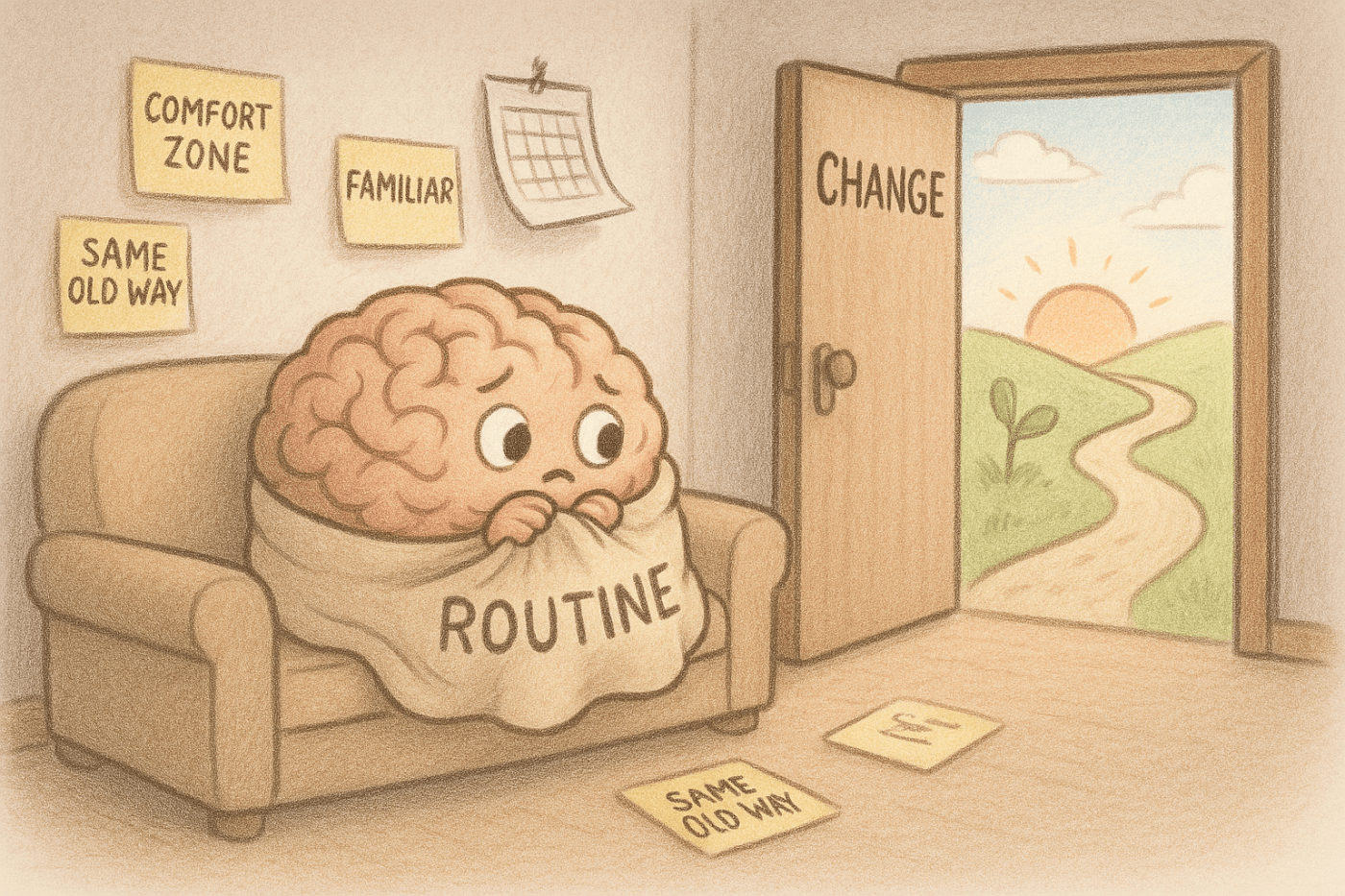
They say nothing is more constant than change. Ironically, the moment change knocks, we pretend we’re not home. We hide behind routines, clutch our comfort zones like old blankets, and whisper, “Everything was fine yesterday.”
Change is funny that way. We admire it in motivational quotes, applaud it in success stories, and recommend it generously to others. But when it arrives personally—unannounced, uninvited, and inconvenient—we suddenly become philosophers who believe in stability.
Our brain, bless its hardworking neurons, is a creature of habit. Routine is its favourite comfort food. When life runs on autopilot—same route to work, same coffee mug, same process in the office—our brain relaxes. It says, “Ah, predictable. I can save energy here.” The moment something changes—a new software update at work, a new manager, a new timetable—our brain panics like it has lost its spectacles while they’re still on its head.
A beautiful example lies hidden in books we’ve loved for years. In Who Moved My Cheese?, the characters don’t suffer because the cheese disappears; they suffer because they keep going to the same empty spot, hoping the cheese will magically reappear. Change isn’t painful—resistance to change is. Or take The Alchemist. Santiago’s biggest struggle isn’t crossing deserts; it’s leaving behind the familiar sheep and the comfort of knowing what tomorrow looks like. “When we are no longer able to change a situation, we are challenged to change ourselves.” Easier to underline than to live by.
In real life, we see this everywhere. At work, when processes flow smoothly, we feel efficient and confident. The moment a new system is introduced, productivity dips, frustration rises, and sentences begin with, “Earlier this was much easier.” The truth is, it wasn’t easier—it was just familiar. Even positive change takes time to settle. A promotion excites us but also scares us. A new house looks beautiful but doesn’t feel like home immediately. Even a new hairstyle needs a few days before we stop checking mirrors suspiciously.
Why is change so threatening? Because it comes with uncertainty. And uncertainty triggers fear. Our brain loves known problems more than unknown possibilities. We prefer a predictable struggle over an unpredictable opportunity. As someone once said, “The devil you know feels safer than the angel you don’t.”
Yet, here’s the twist: every meaningful growth story begins with discomfort. Muscles grow when stretched. Minds expand when challenged. Lives transform when we allow the unfamiliar to teach us. Change doesn’t ask us to be fearless; it only asks us to be willing. Willing to stumble, willing to learn, willing to feel awkward for a while.
So the next time change makes you uneasy—at work, at home, or within yourself—pause before resisting. Smile at your brain for doing its job of protecting you. Then gently remind it: “This discomfort is not danger. It’s development.”
Thought to ponder:
If you weren’t afraid of the unfamiliar, what version of your life might already be waiting for you on the other side of change?
 Sharon's Read And Reflect
Leave a comment