
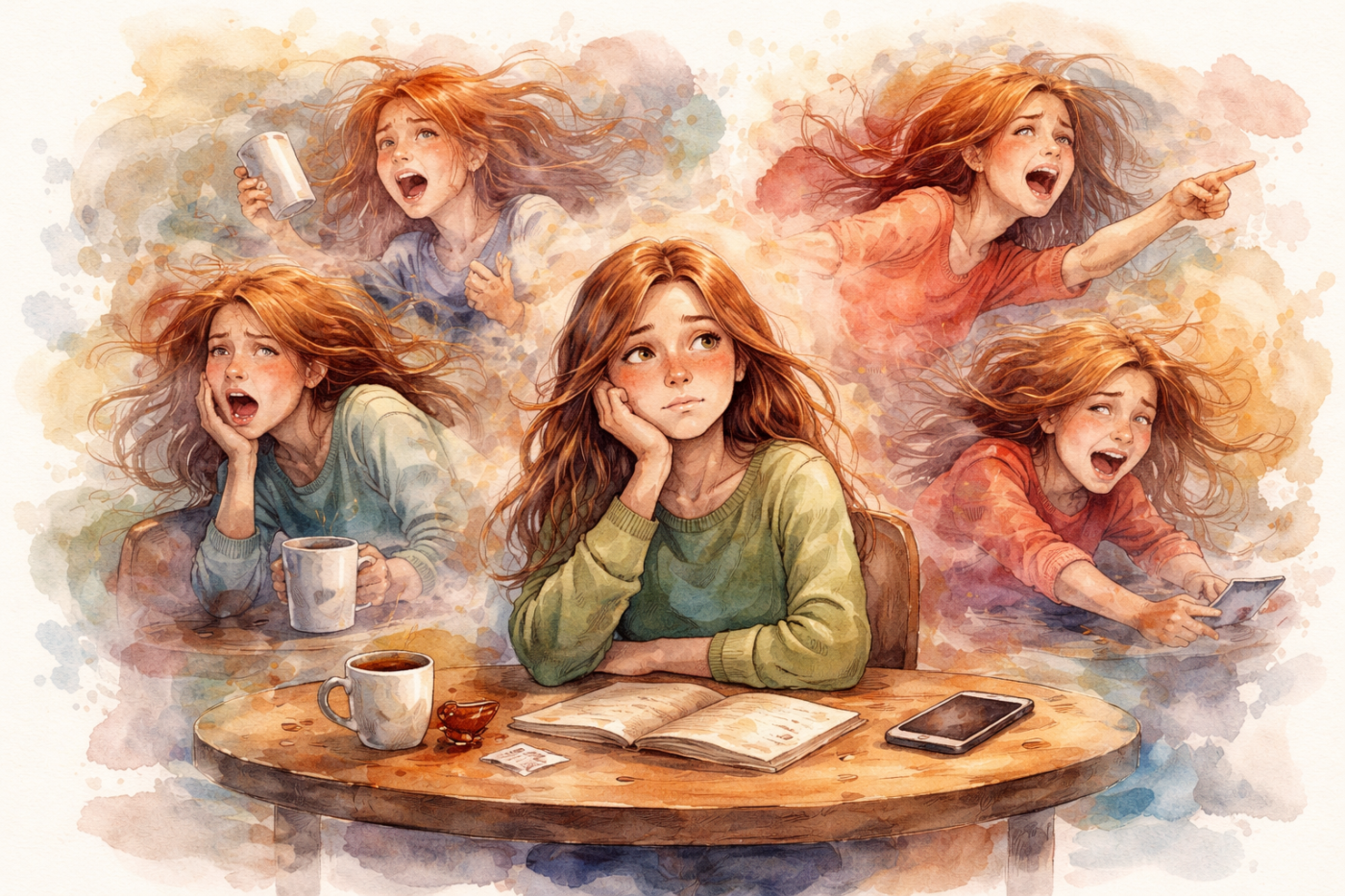
It happened in a moment so small, it could have slipped through time unnoticed—like an extra spoon of sugar in tea. But instead, it stayed.
Recently, a friend looked at me and said, “That wasn’t you… that felt impulsive.”
And just like that, my brain—usually a calm, well-behaved librarian—was suddenly accused of throwing a chair across the room.
Strange, isn’t it?
We like to believe we are consistent beings. Same thoughts, same reactions, same “this is who I am.” But every once in a while, we surprise even ourselves.
“Sometimes, we don’t act out of character—we act out of unprocessed emotions.”
The truth is, our brain is not just one personality. It’s more like a crowded family WhatsApp group. There’s the calm version of you, the logical one, the overthinker, the tired one, the triggered one… and occasionally, the dramatic one who types before thinking.
Impulsiveness is often not randomness—it’s overflow.
Think about it. Sleep deprivation, stress, emotional build-up, feeling unheard, constant multitasking… all of these quietly stack up inside us. And then one tiny trigger presses the “send” button before our wiser self can edit the message.
“The brain doesn’t always wait for permission; sometimes it reacts for protection.”
In those moments, your brain isn’t trying to sabotage you. It’s trying to release pressure. Like a pressure cooker that whistles—not because it wants attention, but because it needs relief.
And let’s be honest, we all have that one moment where we say, “Why did I say that?” or “That didn’t sound like me.”
But maybe… it was you.
Just not the polished, socially acceptable, always-in-control version of you.
Maybe it was the tired you. The overwhelmed you. The you that hasn’t had a quiet moment to breathe.
“Impulsiveness is often a conversation your emotions were waiting to have.”
The key is not to feel guilty—but to get curious.
What triggered it?
What was I feeling before that moment?
Was I holding something in?
Because understanding that one impulsive moment can teach you more about yourself than a hundred calm days ever will.
And maybe next time, instead of reacting, you’ll recognize the early signs—the rising thoughts, the tightening chest, the urge to respond quickly—and gently pause.
Not suppress. Not judge. Just pause.
Because you are not your worst five seconds.
You are the awareness that comes after.
Thought to ponder
If impulsive moments reveal the parts of us we usually hide… are they mistakes, or are they messages we haven’t learned to listen to yet?
 Sharon's Read And Reflect
Leave a comment