
Have you ever noticed something strange about stress? The moment you most need your brain, it quietly walks out for a coffee break.
You enter a room confidently, ready to speak… and suddenly your mind becomes an empty whiteboard.
Someone asks a simple question… and your brain responds with silence so loud that even Google couldn’t help.
Congratulations. You’ve just experienced the brain’s famous “stress shutdown mode.”
But here’s the surprising part — your brain isn’t failing you. It’s actually trying to protect you.
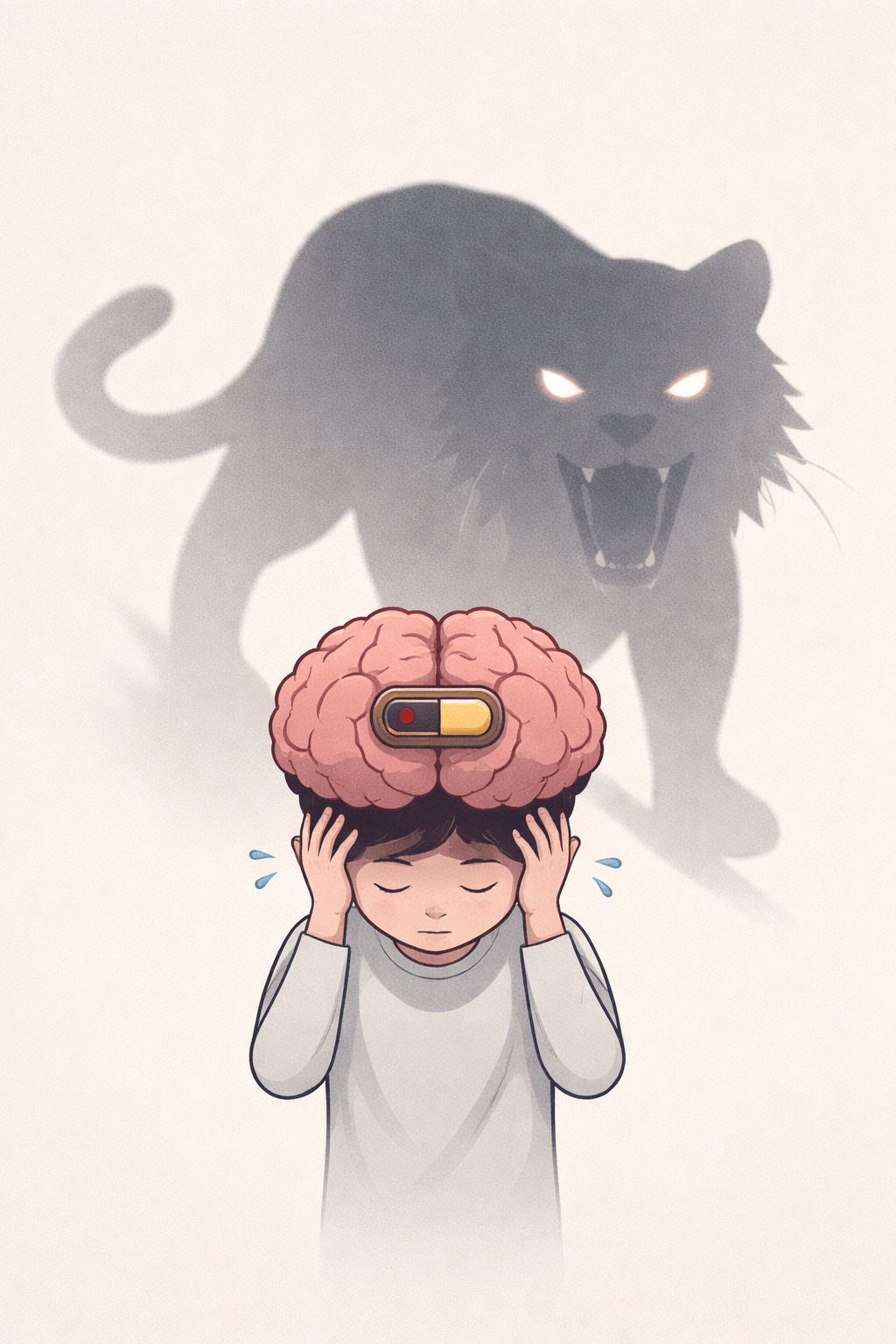
Thousands of years ago, when our ancestors saw a tiger in the jungle, their brain had only one job: survive. In stressful situations, the brain activates the fight, flight, or freeze system. Blood rushes to the muscles, the heart beats faster, and logical thinking politely steps aside.
As neuroscientists often say:
“When survival mode turns on, thinking mode turns down.”
The part of the brain responsible for reasoning — the prefrontal cortex — temporarily loses control. Meanwhile, the emotional alarm center called the amygdala grabs the microphone and screams, “Danger! Do something!”
The problem is that today’s “tigers” are not wild animals.
They are meetings, deadlines, exams, parenting chaos, or even that awkward moment when someone says, “Let’s go around the room and introduce ourselves.”
Your brain doesn’t know the difference.
So it reacts like you’re being chased in the forest — even though you’re just opening PowerPoint.
As someone wisely said,
“Stress doesn’t make us stupid. It just makes us temporarily primitive.”
The good news? You can gently convince your brain that the tiger is actually just a house cat.
Here are a few surprisingly simple ways:
1. Breathe like nothing is chasing you.
Slow breathing signals the brain that you are safe. Just 4–5 deep breaths can calm the nervous system.
2. Name the stress.
When you say, “I’m feeling stressed,” the brain shifts from emotional mode to thinking mode.
3. Move your body.
A short walk, stretching, or even shaking your hands resets the stress response.
4. Lower the pressure.
Your brain works best when it knows mistakes are allowed. Perfection is the fastest way to silence creativity.
5. Add humour.
Nothing confuses stress more than laughter. Even a small smile tells your brain: “Relax, we’re still alive.”
Because in the end, your brain isn’t your enemy during stress.
It’s just an overprotective security guard who sometimes locks the building while you’re still inside.
“Calm the alarm, and the wisdom returns.”
So the next time your mind goes blank, don’t panic.
Your brain hasn’t disappeared.
It’s simply waiting for a signal that the tiger has left the room.
Thought to ponder
If calm thinking brings clarity, what small habit can you practice today to teach your brain that not every problem is a tiger?
 Sharon's Read And Reflect
Leave a comment