
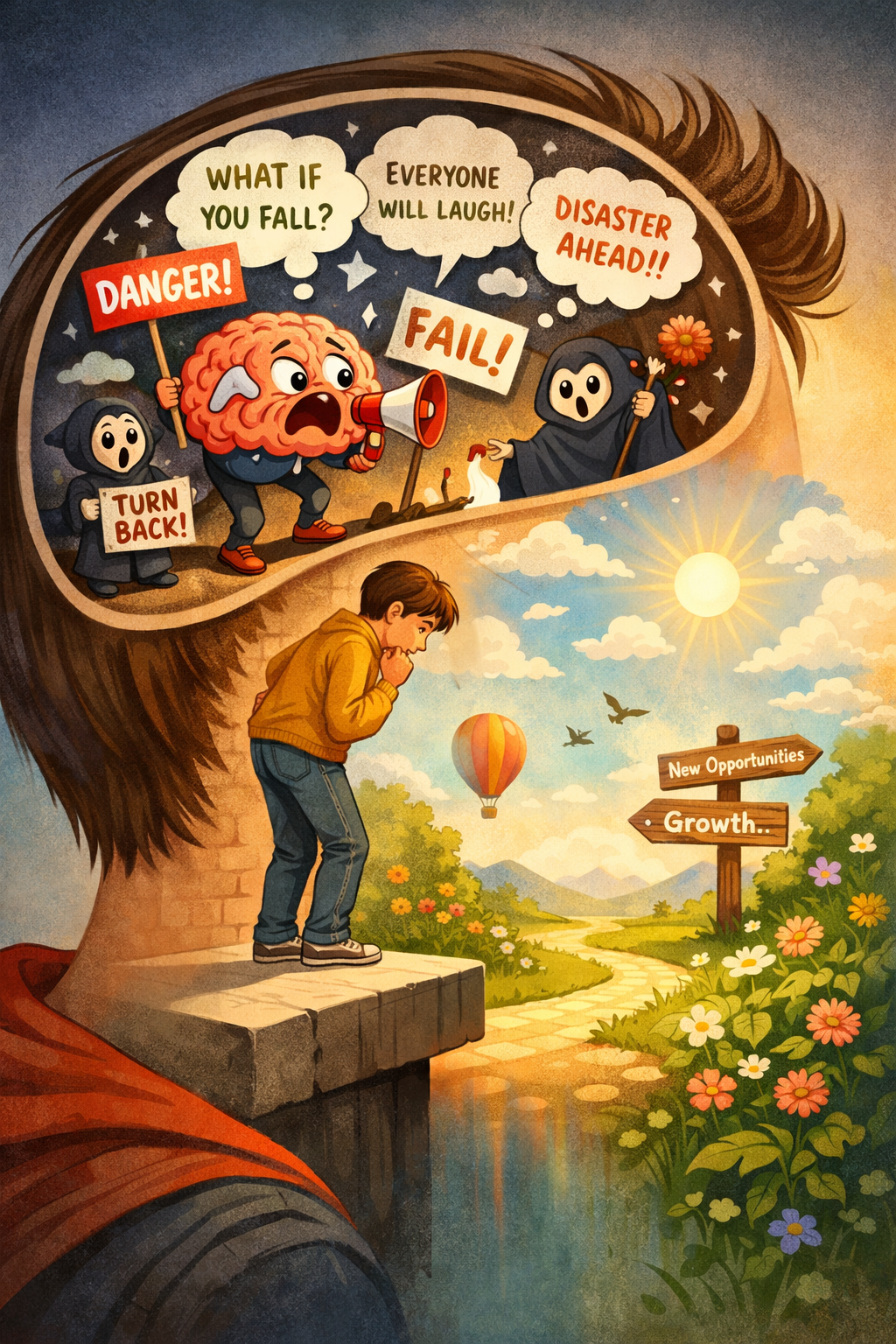
What if the biggest obstacle between you and success isn’t the world, your talent, or bad luck—but a tiny voice in your head that whispers, “What if I mess up?”
Funny thing is, this voice rarely waits for evidence. It shows up early, brings snacks, and settles in comfortably.
Psychologically, fear of failure isn’t really about failure at all. It’s about meaning. The brain doesn’t fear a failed exam, a rejected idea, or a missed goal—it fears what those outcomes say about us. Somewhere deep inside, failure gets translated as “I am not enough.” And the brain, whose job is survival, panics like it’s spotted a tiger instead of a typo.
“The brain prefers familiar pain over unfamiliar growth.”
So it nudges us toward procrastination, perfectionism, or the classic excuse: “I’ll try later.” Later, of course, being a magical time when confidence is high, fear is low, and life is cooperative. (Spoiler: later doesn’t exist.)
Ironically, fear of failure often hides behind impressive disguises. Overthinking looks like intelligence. Playing safe looks like maturity. Not trying looks like not caring. But under the mask, fear is doing what it does best—protecting us from imagined embarrassment.
“Fear is a storyteller, not a fortune teller.”
It tells dramatic tales: Everyone will judge you. You’ll never recover. This one mistake will define your entire life.
Reality, meanwhile, is far less cinematic. Most people are too busy worrying about their own mistakes to archive yours.
Here’s the humorous twist: the brain learns far more from failure than success. Success says, “Good job, repeat.” Failure says, “Interesting… let’s rewire.” Yet we celebrate one and shame the other, as if learning should only come wrapped in applause.
Psychologists often say that fear of failure grows when self-worth is conditional. When worth depends on results, failure feels personal. But when worth is stable, failure becomes information—not an identity.
“You are not your outcomes; you are your effort in motion.”
Once the brain understands this, fear loosens its grip. Not because failure disappears—but because its meaning changes.
So the next time fear shows up early, remember: it’s not there to stop you from failing. It’s there to stop you from feeling. And feelings, inconvenient as they are, are not emergencies.
Thought to ponder:
If failure taught you something valuable and success taught you nothing new—would you still be afraid of it, or would you finally listen?
 Sharon's Read And Reflect
Leave a comment