
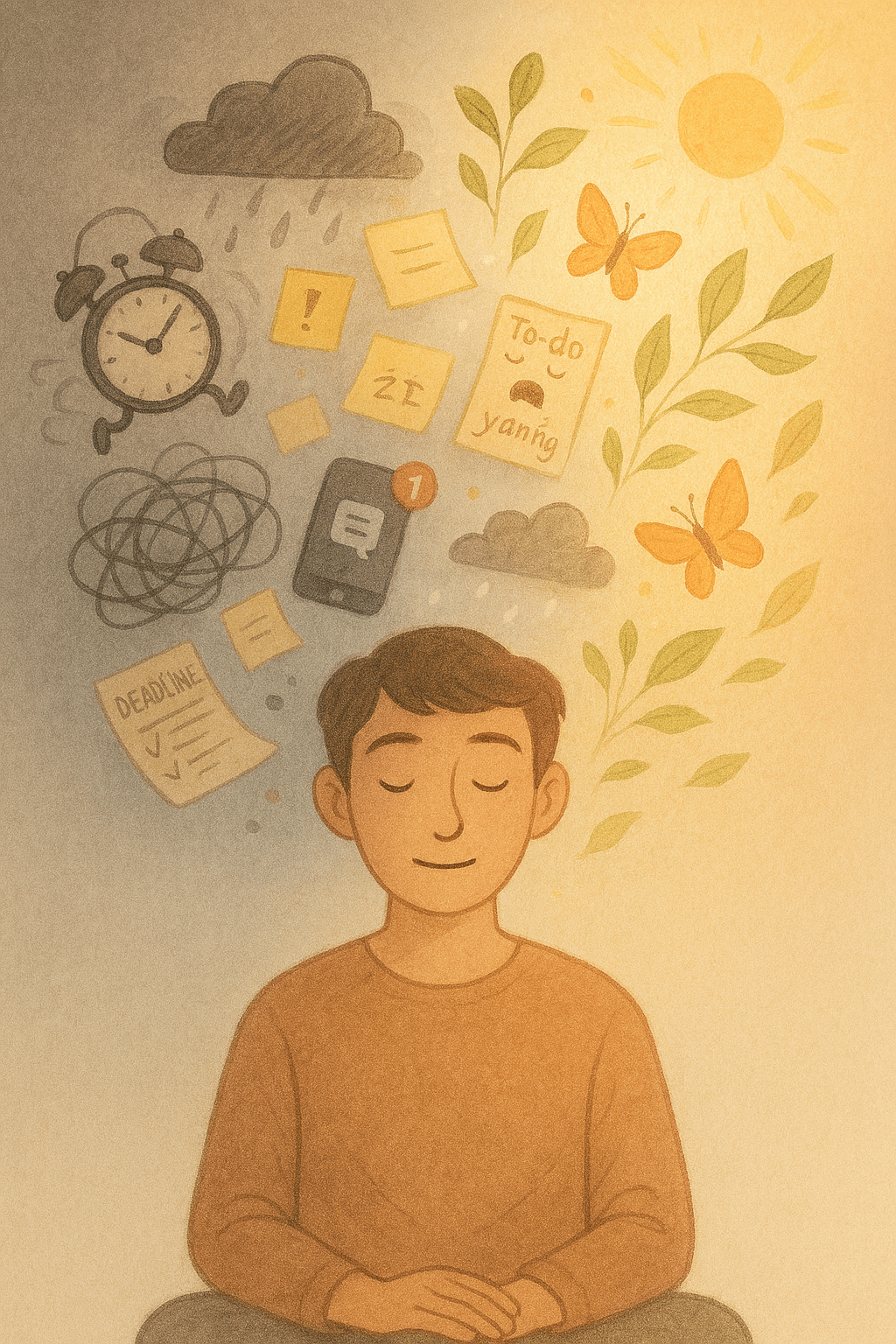
When did stress stop knocking and start living rent-free in our heads?
Is it when the phone buzzes and our heartbeat races before we even read the message?
Or when silence feels louder than noise because the mind refuses to rest?
Stress rarely arrives with drama. It slips in quietly—between deadlines and dishes, expectations and emails, love and responsibility. At first, it pretends to be useful. “I’ll keep you alert,” it says. “I’ll help you manage.” And sometimes, it does. But stay too long, and stress becomes that houseguest who rearranges your furniture, eats your peace, and still complains about the tea.
“Stress is not what happens to us. It’s what we tell ourselves about what happens.”
Stress affects us in sneaky ways. It tightens shoulders before it breaks sleep. It shortens patience before it raises blood pressure. It turns small inconveniences into emotional earthquakes. Our bodies remember what our minds try to ignore—headaches, fatigue, random aches, mood swings, and that constant feeling of being ‘on edge’ without knowing why.
Emotionally, stress makes us impatient with people we love and polite with people we don’t. It steals joy from the present by dragging the future into every moment. Over time, it doesn’t just exhaust us—it slowly disconnects us from ourselves.
“The body whispers before it screams. Stress is often the whisper.”
The irony? Most of our stress doesn’t come from reality—it comes from imagination rehearsing worst-case scenarios. The mind, incredibly talented, becomes a full-time scriptwriter for problems that may never audition for real life.
But here’s the hopeful part: stress is manageable. Not by grand life makeovers, but by small, honest shifts. Simple practices done consistently can soften even the loudest mental noise.
10 Simple, Practical Ways to Handle Stress
1. Name it. Saying “I’m stressed” out loud reduces its power instantly.
2. Breathe slower than your thoughts. Even 5 deep breaths reset your nervous system.
3. Lower your expectations, not your worth. You don’t have to do everything perfectly.
4. Move your body gently. A short walk can untangle long thoughts.
5. Create a worry window. Worry only during a fixed time; rest the rest of the day.
6. Unplug intentionally. Silence notifications before they silence your peace.
7. Eat without distraction once a day. Mindful eating grounds the mind.
8. Laugh at least once daily. Humour is underrated therapy.
9. Write one sentence before sleep. Let the mind empty itself on paper.
10. Ask for help without guilt. Strength grows when shared.
“Rest is not a reward for finishing everything; it’s a requirement for surviving anything.”
Stress may never completely disappear—but it doesn’t have to dominate your life either. You don’t need to eliminate it; you need to learn how to listen, respond, and gently put boundaries around it.
Thought to Ponder
If your mind spoke to you the way you speak to yourself during stress, would you still trust it as a safe place to live?
Sometimes, handling stress isn’t about changing life—it’s about changing the way we sit with it. 🌿
 Sharon's Read And Reflect
Leave a comment