

Children with Attention Deficit Hyperactivity Disorder (ADHD) often face unique challenges in academic settings. For many, exams are not just a test of knowledge but a test of endurance, focus, and emotional resilience. The traditional classroom setting, with its emphasis on prolonged concentration and quiet study, can sometimes feel more like an obstacle than a path to success. But what if we could help ADHD children excel by adapting to their strengths instead of forcing them to fit a rigid mold?
As Albert Einstein famously said, “Everybody is a genius. But if you judge a fish by its ability to climb a tree, it will live its whole life believing that it is stupid.” ADHD children are like that fish—they have extraordinary talents, but conventional learning and assessment methods don’t always allow them to shine. Instead of making them climb trees, why not let them swim?
Embracing Their Strengths
ADHD doesn’t mean a child is incapable—it means they need different tools and approaches to succeed. As Dr. Edward Hallowell, a renowned ADHD expert, put it, “ADHD is not a disease; it’s a trait, and it’s a trait that can be used to great advantage in the right environment.”
Instead of focusing on their struggles, let’s highlight their strengths. Many ADHD children are creative, energetic, and capable of thinking outside the box. Take Maya, for example—a 11-year-old who struggles to focus during long exams but can solve math problems quickly when allowed to explain them out loud. Rather than forcing Maya to sit still and write lengthy essays, why not explore oral assessments or interactive learning tools?
Understanding ADHD: A Different Brain, Not a Deficient One
ADHD brains work differently, not inadequately. While others may have a steady focus, these kids often have a brain that operates like a high-speed train on an unpredictable route. But guess what? That same brain can generate creative ideas, think innovatively, and bring infectious energy to learning. The trick is to harness these strengths while helping them navigate exams without feeling overwhelmed.
A.D.H.D. – Amazing Driven Highly-creative Dreamer
By reframing ADHD in a positive light, we can empower children to see themselves as capable, innovative thinkers rather than individuals who need to be “fixed.” When we help them harness their natural talents, we unlock their full potential.
Step 1: Study Smarter, Not Harder
Expecting an ADHD child to focus through marathon study sessions is like asking a kangaroo to sit still—it’s just not in their nature. Instead, let’s try these strategies:
✔ Bite-Sized Learning: Short, focused sessions (20–25 minutes) with breaks in between prevent mental burnout and keep engagement high.
✔ Multisensory Techniques: Textbooks alone can feel dull. Use flashcards, doodles, mind maps, or even songs to reinforce concepts. (A rap about photosynthesis? Why not!)
✔ Teach It to Someone Else: If they can explain a concept to a stuffed toy, a pet, or a very confused sibling, they’ve truly understood it.

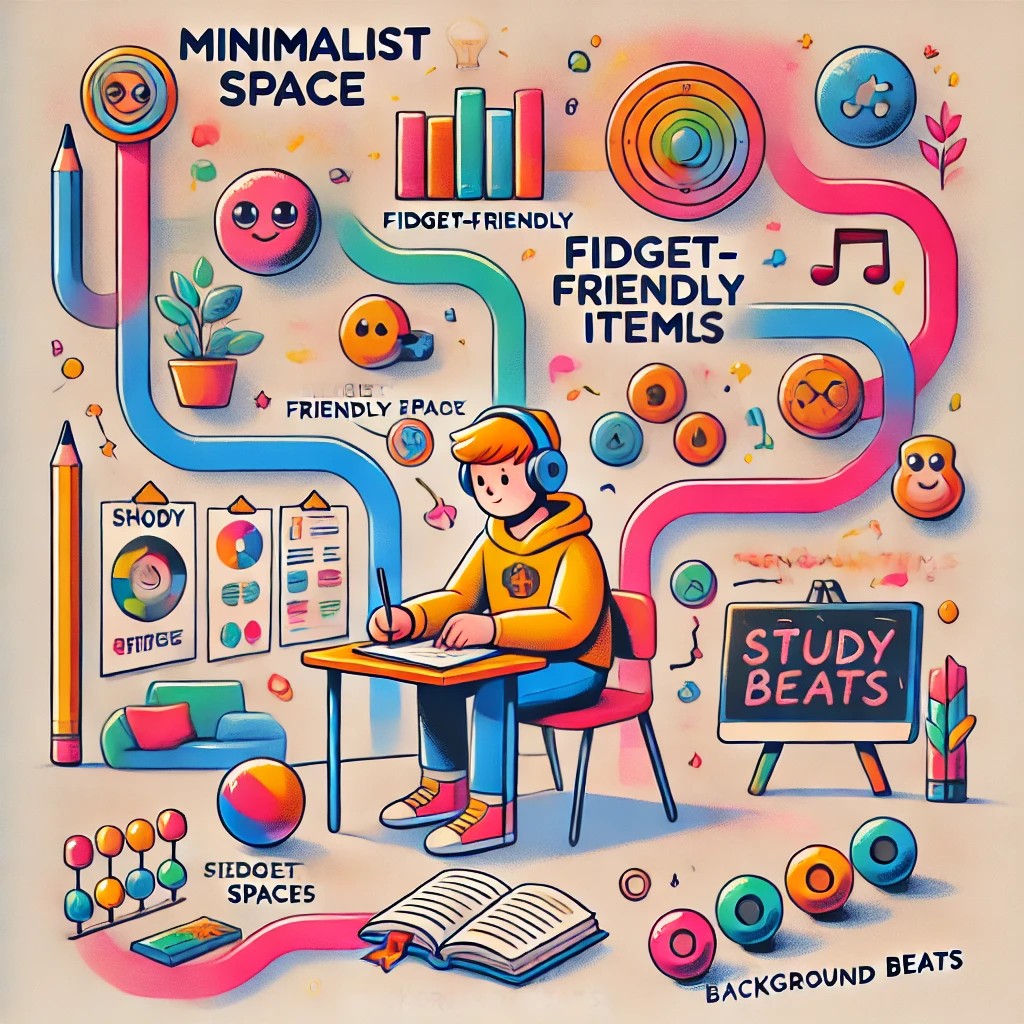
Step 2: Creating the Perfect Exam-Prep Zone
Would you expect a squirrel to concentrate in the middle of a nut factory? No? Then let’s ensure their study environment isn’t a distraction factory.
✔ Minimalist Setup: Keep only the essentials—books, paper, and maybe a motivational snack (because everyone studies better with a cookie!).
✔ Fidget-Friendly Tools: Stress balls, fidget spinners, or even chewing gum can help some kids focus better by keeping their hands busy.
✔ Background Beats: Soft instrumental music or white noise can drown out distractions and enhance focus.
Step 3: Exam Day Superpowers
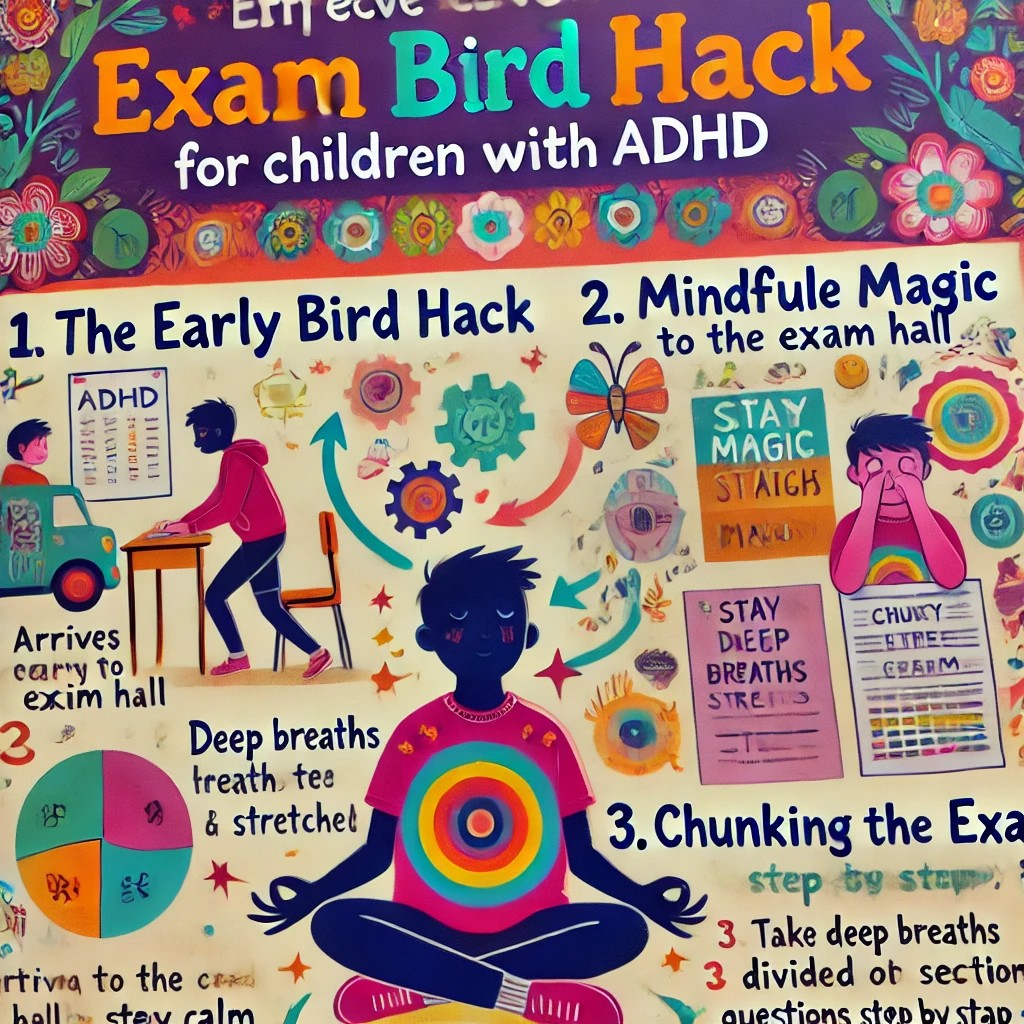
The big day is here! Some students walk in confidently, while ADHD kids might feel like they forgot their sword, shield, and map. Let’s change that:
✔ The Early Bird Hack: Arriving a bit earlier helps ADHD kids settle into the environment before the exam starts, reducing last-minute stress.
✔ Mindful Moments: A few deep breaths, a quick stretch, or feeling the texture of their pencil can ground them and keep anxiety at bay.
✔ Chunking the Exam: Instead of seeing the entire test as an insurmountable challenge, breaking it into smaller goals makes it feel manageable. “Okay, let’s tackle three questions, then take a deep breath.”
Step 4: The Art of Positive Reinforcement
Nobody thrives on criticism alone, and ADHD kids, in particular, respond best to encouragement. Instead of saying, “Why did you leave half the paper blank?” try:
✔ “You nailed those answers! Let’s figure out how to tackle the next ones together.”
✔ “You remembered to bring all your exam supplies—great job!”
✔ “I love how you kept going even when it got tough. That’s superhero material!”
A little positivity can transform a frustrating experience into a confidence booster.

Final Thoughts: Changing the Perspective
Helping ADHD children perform well in exams isn’t just about strategies or accommodations—it’s about shifting our mindset. Instead of forcing them to fit into a rigid system, why not adapt the system to fit them?
Imagine if, instead of saying, “Sit still and focus,” we said, “Let’s find a way to make this fun for you.” Imagine the confidence they would build, the potential they would unlock, and the brilliance they would unleash.
Because in the end, isn’t education about helping every child shine?
What are your thoughts on supporting ADHD children in exams? Do you have any experiences or insights to share? Drop a comment below—I’d love to hear from you! Thank you for being a part of this reading journey.
 Sharon's Read And Reflect
Leave a comment